

It’s no secret that our pups love their food! From their excitement at mealtimes to their willingness to do tricks for treats, they don’t hide their enthusiasm for grub. But why are dogs so food motivated? How can you harness this to get more out of their training? And what are the signs that their fondness for food is turning into an obsession? Today, we’re exploring the answers to all these questions and more. So, grab a snack (your dog already has one in mind) and let’s dig into the science behind their seemingly bottomless appetites!
Instincts and evolutionary drive
They might not always seem like it, but all our cuddly canine companions are descended from grey wolves.(1) While a lot about their appearance and behaviour differs from their fierce ancestors, they share some of the same instincts. And that includes their attitude to food.
Your pooch’s ancestors lived in the wild, where they had to hunt and scavenge for their meals. Grub would often have been scarce, and they wouldn’t have known when their next meal would be. Because of this, they’d have felt a powerful motivation to eat whenever they had the opportunity. And we can still see this behaviour in modern wolves. Even when they’re not hungry, they’ll gorge on large quantities of food to help them survive times of scarcity. On top of which, wolves usually gobble their grub down fast to prevent other animals from stealing it. Hence why we say you’re “wolfing down” your food when you eat quickly!
That makes sense for wolves, but why are dogs so food motivated when we provide them with regular meals? Well, even though our pets have reliable access to food, they still feel this instinctive need to eat whenever possible. All these food-motivated behaviours would have been key to their ancestors’ survival and passed down from generation to generation. So asking your mutt to ignore available grub is like asking them to ignore thousands of years of evolution!
There are some interesting differences between the food-seeking behaviour of dogs and wolves. For example, wolves will persist with problem-solving tasks longer than domestic pooches in order to access a meal.(2) Conversely, our pups are more likely to turn to humans for help getting the grub. However, their overall food motivation remains very similar.
-

Organic Ashwagandha Powder
-
Organic Jerusalem Artichoke Powder
-

Organic Reishi Mushroom Powder
-

Organic Sea Buckthorn Oil


The influence of breed and environment on food motivation
Although all modern dogs have wolf ancestry, they don’t all exhibit the same level of food motivation. Why are some dogs more food motivated than their cousins? It’s a mixture of genetics and environment.
For instance, certain breeds seem to be naturally more food motivated than others. Research has discovered that Labrador retrievers and flat-coat retrievers have a mutation in the POMC gene that correlates with increased food-motivated behaviour.(3) The mutation means they can’t produce two specific substances that are involved in turning off feelings of hunger after eating. This can make them more likely to scavenge for scraps and beg for grub as they feel less satiated. Other studies report that more active dogs are also more food motivated, although this may simply be because they require more calories to fuel their energetic lifestyles.
Turning to environment, it’s common for pooches in multi-pet households to exhibit stronger food motivation. This is likely because they feel an element of competition for resources – even if each animal has their own bowl. Interestingly, studies also suggest that dogs who live in urban environments are more food motivated.(4) Researchers theorised that this could be the result of boredom caused by getting less exercise. However, further investigation is necessary to confirm this.
It's also possible that you think your pup is food motivated because you’ve inadvertently taught them to act that way. For example, if you give in when they beg for scraps at the table or ask for treats, then you teach them that this behaviour leads to a reward. This makes them much more likely to repeat it.
How food rewards the canine brain
We know that our furry friends see treats and grub as rewards. But why is that? It’s not simply that they need food to survive, because they still want it when they’re not hungry. The experience of eating is also enjoyable for pups. They like the flavour and texture of their chow, and even the scent (hard as that is for us to believe!).
In fact, aroma is very closely linked to taste for our pooches. You probably already know that their sense of smell is far superior to our own. And they also have a special organ along their palate that enables them to taste things through scent. This means that aromatic grub (e.g. warm and wet food) is more likely to entice them.
The science behind how your pup responds to food rewards isn’t too dissimilar to how our own brains respond. When your mutt anticipates receiving, or actually receives, a treat, their brain releases a neurotransmitter called dopamine. This creates a positive feeling that’s strongly linked to motivation, reinforcing the behaviour they think led to the treat. In essence, our pets feel good when they eat something tasty, and that motivates them to seek out more grub.
Why are dogs food motivated? It’s thanks to a mixture of evolutionary instincts, genetics, environment, and brain chemistry. This trait isn’t going to change, so how can we use it in a positive way?
Using food motivation in training
You can harness your pet’s love of food for good by using edible treats as an effective training tool. The idea is that you use them as rewards when your dog does what you want them to do. This is a form of positive reinforcement, and it encourages them to repeat the behaviour. They learn to associate the action with something good, turning training into a game rather than a chore. In addition, it builds a closer bond between you and your mutt.
It’s worth differentiating between high-value treats and low-value treats when training your pup. A low-value reward is something like your pooch’s normal kibble, while a high-value reward is something extra tasty and aromatic. Their motivation to receive the latter should be greater than the former. Because of this, you can use high-value treats when teaching your dog new or more complicated behaviours.
As your pet gets the hang of whatever command you’re trying to teach them, phase out the treats. This helps stop your pup from getting too fixated on the food or only obeying you when it’s available. You also have to be careful to avoid weight gain because of too many treats by adjusting the size of their meals.
Other top tips for using food motivation in training include:
-
Keep sessions short so your pet doesn’t get bored or lose focus
-
Be consistent with your verbal commands and actions so you don’t confuse your pup
-
Be patient! Different animals learn at different speeds
-
Never shout at or punish your pooch for getting something wrong
-
End each session with an easy and familiar command so you both feel positive about the training
How to train a dog that’s not food motivated
If you’re currently thinking ‘why are dogs so food motivated except for mine?’, don’t worry! It’s perfectly possible to train a pup who isn’t interested in treats – you just have to discover what motivates them. For some animals, it’s cuddles and praise.(5) In other cases, it’s toys and playtime that they enjoy most. Any of these things can function as a reward in positive reinforcement training. You simply offer them after your mutt performs the right action. It might take a bit of experimentation, but you should be able to identify something that works!
Another option is to try and increase food motivation in your dog. One way to do this is by offering a tastier treat and seeing if that boosts their enthusiasm. Ideally, it should be something that they don’t get to eat very often. Alternatively, you might find that your pup is more motivated by food if you schedule your training session before dinner. If they’re hungry, they’re more likely to be interested in some grub (but don’t withhold their meals to train them).
Finally, if you currently free-feed your pet, consider switching to scheduled mealtimes. When they know that food is always available, it’s less exciting to them and treats lose their value. That means your dog won’t be motivated to ‘work’ for food and the possibility of it won’t hold their attention. Incidentally, free feeding also increases the risk of weight gain and makes it harder to monitor your pup’s food intake. As such, most vets recommend opting for scheduled meals, especially in multi-pet households.
Help! My dog is obsessed with food
It’s natural for our pets to be motivated by food. However, this can sometimes cross the line into obsession. Signs that your pup is overly preoccupied with food include:
-
Constant begging
-
Stealing grub from the kitchen counter or raiding the bin
-
Eating very quickly or not chewing their meals
-
Trying to eat non-food items
-
Aggressively guarding their bowl
You might also notice them losing or gaining weight, drinking and urinating more, or experiencing tummy troubles.
If you’re concerned about your dog’s obsession with food, we recommend taking them to the vet. It’s possible that there’s an underlying health condition making them feel excessively hungry. For example, it could be a metabolic disorder like diabetes, or a parasite or gastrointestinal issue interfering with nutrient absorption. Increased appetite is also a side effect of some medications. In addition, stress and anxiety may cause food obsession in dogs, and even getting older might be to blame.
Once you’ve ruled out medical conditions, you can try the following tactics for reducing food obsession in dogs:
-
Distract them with toys, walks, playtime, and other fun activities
-
Stick to scheduled feeding times so your pup knows when to expect their meals
-
Don’t give in to their begging behaviour (this only reinforces it)
-
Use slow feeder bowls and puzzle feeders to decrease the pace your pooch eats at
-
Store food securely so your pet can’t smell it outside of mealtimes
-
Behave calmly when you give your dog treats or dinner, so they don’t get overexcited
-
Train your mutt to obey commands like ‘leave it’ to help them learn impulse control
The importance of a healthy diet for our pups
At Boosie, we offer a selection of functional foods to support your pooch’s wellbeing – whether they’re food motivated or not!
For example, if you think stress might be causing your dog to fixate on food, ashwagandha powder could be useful. Studies show that it can reduce symptoms of anxiety, fear, and stress in our pets.(6) One way it does this is by reducing levels of the stress hormone cortisol. Along similar lines, reishi mushroom powder may help to promote feelings of calm and relaxation.
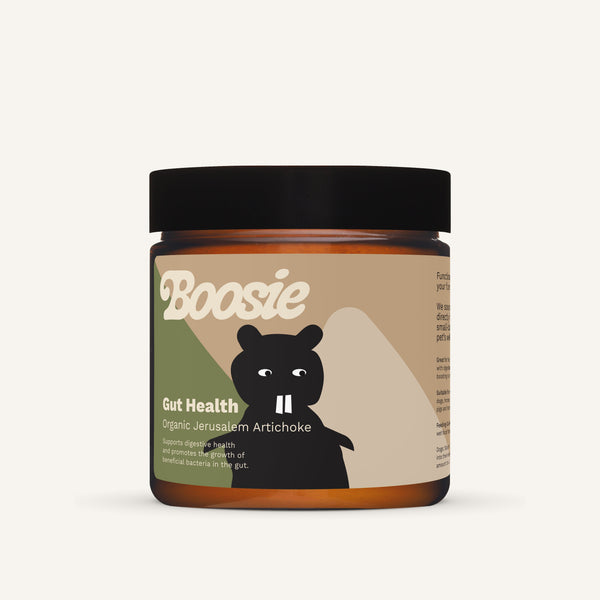
Conversely, our products can add extra nutrients to the meals of fussy pups who fail to finish their dinner. Jerusalem artichoke powder is rich in a type of fibre called inulin that nourishes the gut microbiome and helps regulate blood glucose. Meanwhile, sea buckthorn oil is bursting with omega-7 fatty acids and beta-carotene to support eye and skin health.
Consult your vet before giving your pet any functional foods, especially if they’re on medication or have a health condition. This is to check the ingredients are suitable for their individual needs.
So, why are dogs so food motivated?
There are several reasons our pooches are so motivated by food. It’s an instinct honed over thousands of years of evolution, compounded by genetics, brain chemistry, our actions, and their environment. Luckily, there are steps you can take to reduce the drive if it strays too close to obsession. Plus, food motivation is a handy tool we can use to train our pups through positive reinforcement. Just take care to avoid overfeeding, and combine treats with other rewards like praise and cuddles for the best results. That way, you can turn your dog’s love of snacks from a challenge into a secret superpower!


