

The first time my neighbour's beagle, Otis, had a bout of loose stool, she assumed it was just something he ate. Then it kept happening. Every few weeks, like clockwork, his stomach would grumble, and his energy would dip.
Her vet mentioned one word that changed everything: gut bacteria. Specifically, Otis didn't have enough of the good kind, and his gut needed some help feeding them.
That's where prebiotics come in. They're one of the simplest, most natural ways to support a dog's digestion from the inside out. But scroll through pet store shelves, and you'll find dozens of products claiming to be the best prebiotic for dogs, all with different ingredients, doses, and price tags.
This guide breaks down what a prebiotic for dogs actually does, what the research says, and how to pick one that's worth the money.
What is a prebiotic for dogs, exactly?
A prebiotic is a type of fibre your dog's body can't digest on its own. Instead, it travels down to the gut, where it becomes food for the beneficial bacteria living there.(1)
Think of it less like a supplement and more like fertiliser. It doesn't add new bacteria to the gut. It feeds the good bacteria that are already there so they can grow and do their job better.
The most researched prebiotic fibres are inulin and fructo-oligosaccharides (FOS), both naturally found in plants like chicory root and Jerusalem artichoke.(1) These fermentable fibres pass through the stomach and small intestine intact, then get broken down by bacteria in the colon.
Prebiotics vs probiotics: what's the difference?
It's easy to mix these two up, and pet brands don't always make it clearer. Probiotics are live beneficial bacteria themselves, while prebiotics are the fibre that feeds bacteria already living in your dog's gut.(4)
One introduces new microbes, the other nourishes existing ones. If you want the full breakdown, we cover the difference between prebiotics and probiotics in more detail in a separate article.
-
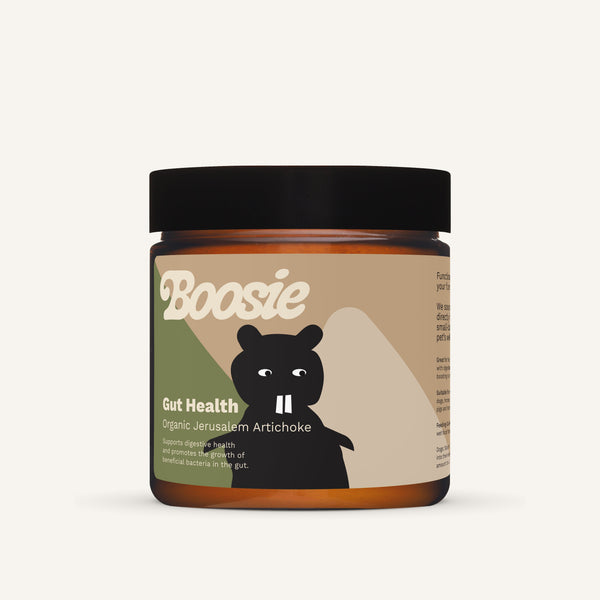
Organic Jerusalem Artichoke Powder
-

Organic Turkey Tail Mushroom Powder

Why dogs benefit from a natural gut supplement
A dog's gut isn't just about digestion. It's home to trillions of bacteria that influence everything from stool quality to immune strength, which is why so many pet parents start looking for a natural gut supplement for dogs in the first place.
Better digestion and firmer stools
This is the benefit most pet parents notice first. In a 2023 study of senior dogs, a prebiotic fibre blend significantly reduced the number of poor-quality stools compared to a control group, while also producing firmer stools and lowering faecal pH (2)
That drop in pH matters more than it sounds. A more acidic gut environment makes it harder for pathogenic bacteria to take hold.(2)
The same study found the prebiotic blend encouraged more Lactobacillus (a beneficial genus) while reducing less desirable bacteria like Escherichia/Shigella.(2) In plain terms: better bacteria in, fewer troublemakers around.
Immune support through the gut-immune axis
Roughly 70% of a dog's immune tissue lives in and around the gut, which is why researchers increasingly describe digestion and immunity as two sides of the same coin.(3)
Specialised immune cells in the gut lining constantly sample bacteria and decide whether to promote tolerance or trigger inflammation, and that decision is shaped by which bacteria are present.(3) A well-fed, balanced gut microbiome tends to favour calmer, more regulated immune responses, while an imbalanced one (called dysbiosis) is consistently seen in dogs with chronic digestive disease.(3)
Feeding the right bacteria with prebiotic fibre is one gentle, natural way to support that balance from the inside.
Jerusalem artichoke: nature's favourite prebiotic ingredient
If you've researched natural gut supplements for dogs, you've probably come across Jerusalem artichoke. It isn't actually related to artichokes at all. It's a knobby little tuber related to the sunflower, and it happens to be one of the richest natural sources of inulin around.
Inulin from sources like Jerusalem artichoke and chicory root has been the subject of the most dog and cat prebiotic research to date.(1) In one faecal microbiota study, dogs supplemented with inulin and FOS showed increases in beneficial groups like Bifidobacterium, though individual dogs responded differently, which is normal with fibre supplementation.(1)
It's part of why we built our Organic Jerusalem Artichoke Powder around a single, simple ingredient. No fillers, no added sugar, just the tuber itself, dried and ground.
We've also written a deeper look at whether inulin is safe for dogs and whether dogs can eat artichoke, if you want to go further down that rabbit hole.
How to choose the best prebiotic for dogs
Not every prebiotic on the shelf is created equal. Here's what actually matters when you're comparing options.
Ingredient source and purity
Look for a named, whole-food source of prebiotic fibre, like Jerusalem artichoke, chicory root, or a specific oligosaccharide, rather than a vague "prebiotic blend" on the label. Organic certification is a good sign the ingredient wasn't grown with synthetic pesticides.
No fillers, sugar, or unnecessary additives
Some products bulk up their formulas with maltodextrin, added sugars, or artificial flavouring to make them more palatable. None of that helps your dog's gut, and added sugar can work against the very bacterial balance you're trying to support.
An appropriate, gradual dose
Fibre is a "start low and go slow" ingredient. A quality product will have clear dosing guidance based on your dog's weight, because too much prebiotic fibre too quickly can cause gas or loose stool, even though the ingredient itself is safe.(1)
Third-party support and transparency
Brands that are upfront about sourcing, testing, and dosage tend to be the ones worth trusting. If a company can't tell you where the ingredient comes from, that's worth a second look.
Signs your dog's gut might need support
You don't need a lab test to notice when something's off. Cornell University's veterinary college notes that occasional loose stool from diet changes or stress is common and usually resolves within a couple of days.(5)
But a few signs are worth paying closer attention to:
-
Soft, inconsistent, or smelly stool that lasts more than a couple of days
-
Excess gas or a noticeably grumbly stomach
-
Low energy or a dip in appetite
-
Frequent skin or coat issues, which can sometimes trace back to gut imbalance
Cornell also notes that diarrhoea lasting more than 48 to 72 hours, or paired with vomiting, black stool, or loss of appetite, should be seen by a vet rather than managed at home.(5) A prebiotic is a supportive, everyday tool, not a substitute for veterinary care when something looks seriously wrong.
If you want a fuller checklist, we've put together a guide on symptoms of poor gut health in dogs and a companion piece on how to improve dog gut health naturally.
How to introduce a new prebiotic gradually
Here's the part that trips people up: more isn't better, especially at the start. Sudden changes to a dog's diet, including fibre intake, are a well-known trigger for temporary digestive upset.(5)
Start with a small fraction of the recommended dose, maybe a quarter to half, mixed into your dog's regular food. Give it four to seven days before increasing toward the full amount.
Watch stool quality along the way. Firmer, more consistent stools are a good sign things are heading the right direction. If you notice gas or looser stool, just dial the dose back slightly and go slower.
What's the best prebiotic for dogs?
There's no single "best" prebiotic that works identically for every dog, but a few things make a product stand out: a single, named, organic fibre source; clear dosing; and no unnecessary fillers.
Our Organic Jerusalem Artichoke Powder is built on exactly that principle: one ingredient, doing one job well. For dogs who need broader digestive support, we pair it with a gut-soothing mushroom in our Healthy Gut Set, which combines the prebiotic powder with our Organic Turkey Tail Mushroom Powder for a gentle one-two approach to digestion and immune support.
If you're still comparing categories of gut supplements altogether, our guide on choosing the best gut supplement for dogs walks through prebiotics, probiotics, and postbiotics side by side.
As for Otis? A slow, gradual introduction of a Jerusalem artichoke prebiotic, alongside his regular vet checkups, made a real difference within a couple of weeks. His stool firmed up, his energy came back, and his tail hasn't stopped wagging since.
Frequently asked questions
Can I give my dog a prebiotic every day?
Yes, prebiotic fibre is generally intended for daily use, since the beneficial bacteria in your dog's gut need a consistent food source to thrive. Always follow the product's dosing guidance for your dog's weight, and check in with your vet if your dog has an existing digestive condition.
How long does it take for a prebiotic to work in dogs?
Research on prebiotic fibre blends in dogs has shown measurable improvements in stool quality within about three weeks of consistent use.(2) Every dog's gut microbiome is a little different, so some notice changes sooner and others take a bit longer.
Can puppies have prebiotic supplements?
Puppies can generally have prebiotic fibre, but their digestive systems are still developing, so it's worth introducing anything new slowly and checking with your vet first, especially if your puppy is very young or has a sensitive stomach.
What foods naturally contain prebiotics for dogs?
Jerusalem artichoke and chicory root are among the richest natural sources of inulin, a well-studied prebiotic fibre.(1) Small amounts of other fibrous vegetables can also contribute, though whole, concentrated sources make it easier to control the dose.
Is Jerusalem artichoke the same as regular artichoke?
No, despite the name, Jerusalem artichoke is a tuber related to the sunflower, not the globe artichoke. It just earned its confusing name from its faint artichoke-like flavour.


