

Today, we’re talking about the best dog food for sensitive stomachs and feeding tips for pooches with unhappy tummies. Whether your mutt has a food intolerance or stress-related digestive troubles, we hope this advice will help you both!
A quick intro to your dog’s digestive system
We could just list off the best dog food for sensitive stomachs and end the post there! However, we think it’ll be more helpful to first look at why your pup might need it. After all, the more we understand about our pets, the better we can care for them.
The function of your pooch’s digestive system is much the same as your own. Its job is to digest food, absorb the nutrients it contains, and eliminate the waste. All of which is crucial for overall health. Like with us, it’s the stomach, small intestine, large intestine, and gut microbiome that do most of the work. A dog’s stomach is more acidic than ours though, and food moves through it a little slower than in people. Conversely, food moves more quickly through canine intestines than the human gut.
Another similarity between us and our mutts is that we’re all omnivores and can eat both plants and meat. Of course, that doesn’t mean we’re able to chow down on the same meals! Lots of human foods are toxic to pups – and knowing which is a vital part of being a pet parent. But good gut health is about more than just avoiding harmful ingredients, especially if your dog has a sensitive stomach.
So, why is it important to find the best dog food for sensitive stomachs? Is it just about preventing unpleasant symptoms like vomiting and diarrhoea? Or is there more at stake?
-

Organic Ashwagandha Powder
-
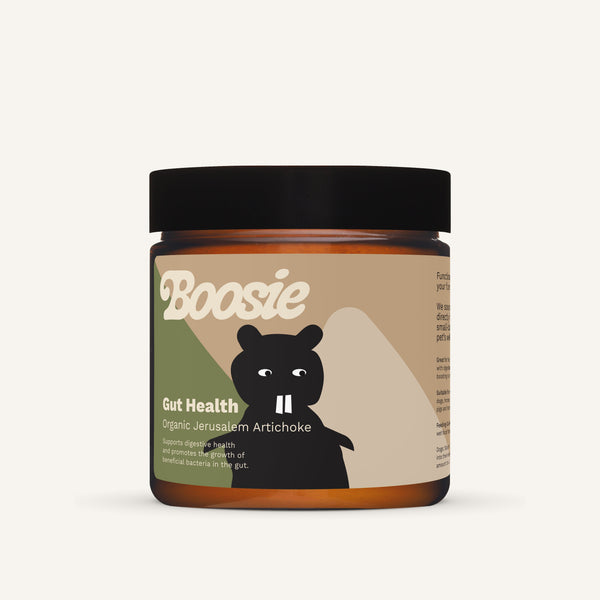
Organic Jerusalem Artichoke Powder
-

Organic Turkey Tail Mushroom Powder


The importance of looking after your dog’s digestive health
We all want our pets to be happy and healthy. Tummy troubles are no fun for us or our pooches, but gut health goes beyond these symptoms. And this is largely because of the gut microbiome. The good bacteria within the gastrointestinal tract play a role in many aspects of canine wellbeing. For example, they contribute to the production of neurotransmitters and hormones, which have a direct influence on mood and behaviour. Indeed, studies have linked the presence of certain types of gut bacteria with increased anxiety and aggression in dogs.(1)
In addition, the condition of your pooch’s gut has a notable effect on their immune system.(2) Approximately 70% of your dog’s immune cells are in their gut, and the bacteria there help regulate the production of antibodies. The microbiome also helps to fight off pathogens and stop them from entering the bloodstream and other organs.
So, where does sensitive stomach dog food fit into all this? Well, digestive issues like vomiting and diarrhoea can disrupt the gut microbiome and leave it less able to function effectively. And, as we’ve just seen, this could have a noticeable impact on many aspects of your pet’s health and behaviour. Research has discovered that gut dysbiosis may also contribute to cardiovascular problems.(3)
If your mutt has tummy troubles, feeding them the best dog food for sensitive stomachs will have both short- and long-term benefits. First, it should help ease unpleasant symptoms like bloating, flatulence, diarrhoea, and vomiting. Second, it can prevent disruption to the good bacteria in their gut and nourish the microbiome. All of which ensures your pooch feels better and cares for their wider wellbeing.
Why do some dogs have sensitive guts?
There are many explanations as to why you might need to feed your pup dog food for digestive issues. Sensitive tummies can arise for all sorts of reasons, some of which are temporary and others more long-term.
For instance, it could simply be that your pooch has been eating a lot of things they shouldn’t! This might be table scraps from your plate, grub they’ve scavenged from the bin, or low-quality dog food. There’s also the possibility that your mutt is allergic or intolerant to a certain ingredient (or more than one). Some of the most common triggers for tummy troubles in dogs are beef, dairy, chicken, and wheat.(4)
One factor to consider if your pup’s current grub is causing digestive difficulties is whether you changed their diet too quickly. Your pet’s gut needs time to adapt to new food, and an abrupt alteration can result in tummy problems. A gradual transition, whether to a dog food for sensitive stomach or not, is preferable. Ideally, you want to increase the proportion of new food to old over about 7-10 days.
Another reason you might be searching for the best dog food for sensitive stomachs is that your pup feels stressed. Just as their gut can affect their mental health, their mental health can affect their gut. If they’re struggling with an issue like separation anxiety, their tummy may be feeling delicate as a result.
Finally, it’s possible that your pet’s stomach issues are due to an underlying health condition. As such, it’s a good idea to take them to the vet for a check-up. That way, they can rule out any serious problems, and you can start looking for the best dog food for sensitive stomachs!
What is the best dog food for sensitive stomachs?
The best dog food for sensitive stomachs will be one that’s easy to digest and has a limited number of ingredients. For instance, try to find grub that contains easily digestible proteins. These include salmon and other types of fish, cottage cheese, lean chicken, and turkey. Fibre is an especially gut-friendly macronutrient, so veggies like pumpkin and sweet potato are also beneficial. Conversely, you want to avoid foods that are high in fat or contain a lot of additives and filler ingredients.
In addition, some of the best dog food for sensitive stomach relief will include probiotics. These are ingredients that contain live, good bacteria that support your pup’s digestive health. They help to bring the gut microbiome back into balance, inhibiting the growth of bad bacteria and allowing the beneficial ones to flourish. You can also buy probiotic treats and chews, or try offering your pooch kefir or plain, unsweetened probiotic yoghurt.
If you think your mutt’s tummy troubles are due to a food intolerance, you could try an elimination diet. The purpose of this is to identify the problem ingredients so that you can avoid them in the future. It’s best done under professional supervision, so speak to your vet about this if it’s relevant.
While there are plenty of options for vet-prescribed dog food for digestive issues, you can also make your own. This is a useful temporary measure for pups who are struggling to eat because of their symptoms. A mixture of lean proteins, plain white rice or potato, and pumpkin usually goes down well, but consult your vet if you have any questions.
Feeding tips for dogs with sensitive tummies
Choosing the best dog food for sensitive stomachs is only one part of the solution. Here are some other top feeding tips to help prevent and treat canine tummy troubles:
-
Feed your pooch smaller meals more frequently, rather than fewer but larger ones. This avoids overloading their digestive system and helps the gut work more effectively.
-
Transition to new foods gradually, over a period of 1-2 weeks. This allows your mutt’s gut to get used to the change.
-
Don’t give your pup any scraps from your plate. These can cause digestive issues, and some ingredients may even be toxic to our furry friends. High-fat foods also raise the risk of conditions like pancreatitis.
-
Along similar lines, try not to feed your dog too many treats. (We know it’s hard to say no to those eyes, but it’s in their best interest!)
-
Stick to a consistent feeding schedule to help keep your pooch’s digestive system regular and efficient. It also prevents food-related anxiety and behavioural problems.
-
If your mutt has a tendency to eat too quickly, try a slow feeder bowl or puzzle feeder.
-
Don’t feed your dog just before going for a walk or other kinds of activity. This increases the risk of digestive issues, including serious conditions like gastric dilatation and volvulus (GDV).
-
If you think stress may be contributing to your pet’s tummy problems, feed them in a calm, quiet location. Ideally, you want to choose somewhere they won’t be interrupted by people or other pets.
-
Add a little low-sodium bone broth to your mutt’s bowl if they don’t have much of an appetite. This can help encourage them to eat, plus provides some extra nutrients.
Functional foods to support your dog’s digestion
Here at Boosie, we offer a range of functional, gut-friendly foods that you can add to your pup’s meals. These allow you to turn their normal grub into the best dog food for sensitive stomachs! For example, Jerusalem artichoke powder is rich in a type of fibre called inulin. This acts as a prebiotic, which means it nourishes the good bacteria in your pooch’s gut.(5) And, as we discussed above, that’s key not only for digestive health but also for their overall wellbeing.
Another great option is a medicinal mushroom like turkey tail. This contains a different form of prebiotic fibre – beta-glucan – which also benefits the gut microbiome. It has advantages for the immune system too, activating certain types of immune cells and lessening inflammation.(6) Plus, as an adaptogen, it helps reduce the negative effects of stress on the mind and body.
Speaking of stress, ashwagandha powder is a must-have in the best dog food for sensitive stomachs caused by anxiety. Research shows it can lower cortisol levels and ease stress responses and signs of anxiety in our pups.(7)
We recommend consulting a vet before adding any functional foods to your pet’s diet. This is to check that the ingredient you have in mind is suitable for your pooch’s individual needs. Doing so is especially important if they’re on medication or have an existing health condition. Likewise, you shouldn’t give functional foods to puppies, or dogs who are pregnant or nursing.
Other ways to care for your dog’s digestive health
In addition to buying the best dog food for sensitive stomachs and following the feeding tips above, you can support your pup’s digestive health by:
-
Encouraging them to stay hydrated by ensuring they always have access to fresh, clean water. This helps prevent constipation, break down food, and replace any fluids lost through vomiting or diarrhoea.
-
Exercising your pooch regularly to keep their digestive system moving and improve their overall health. If your pet is currently unwell with tummy troubles, ensure they get plenty of rest until they’re better.
-
Taking your mutt for regular check-ups at the vet so that you can spot, and handle, any digestive issues early.
-
If your pooch struggles with a sensitive stomach, monitoring them closely to see if you can work out the cause. That puts you in a better position to deal with the problem effectively.
-
Trying to minimise the stress in your pet’s life. This includes providing a quiet and cosy place to relax in, as well as lots of toys for mental stimulation. Plus, of course, spending plenty of quality time with your furry friend!
A holistic approach that combines the best dog food for sensitive stomachs with these suggestions is most likely to succeed. And both you and your pet will be happier when their digestive issues are a thing of the past!
The verdict on the best dog food for sensitive stomachs
If your pup struggles with digestive problems, the most appropriate grub will focus on easily digestible ingredients. Salmon, white rice, lean chicken, pumpkin, and potato should all be at the top of the list. Probiotics and prebiotics can also be fantastic additions to help soothe a grumpy gut. Make the change gradually, plus pair it with a regular feeding schedule of small meals and plenty of water. Finally, put a stop to table scraps and high-fat treats, and you’ll soon have a happy and healthy pooch!


